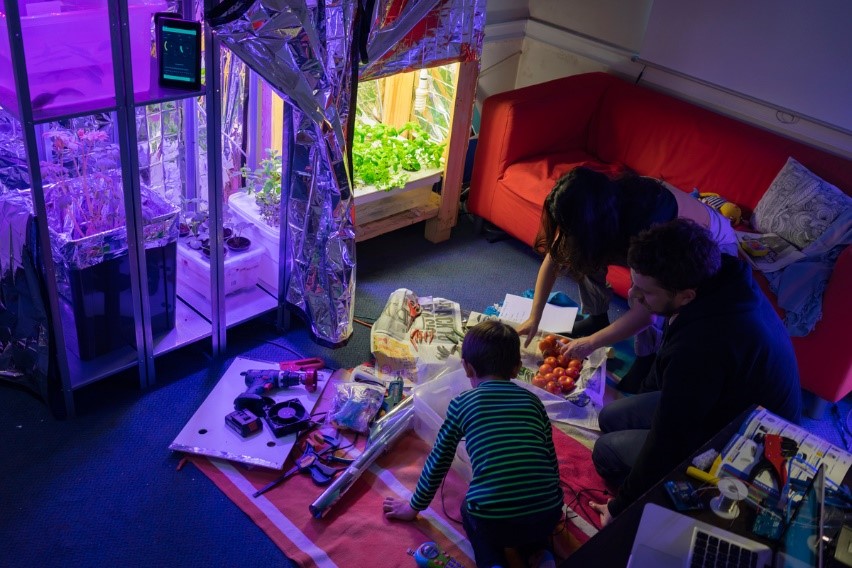
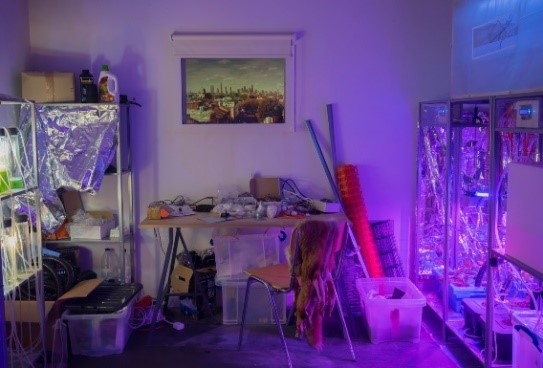
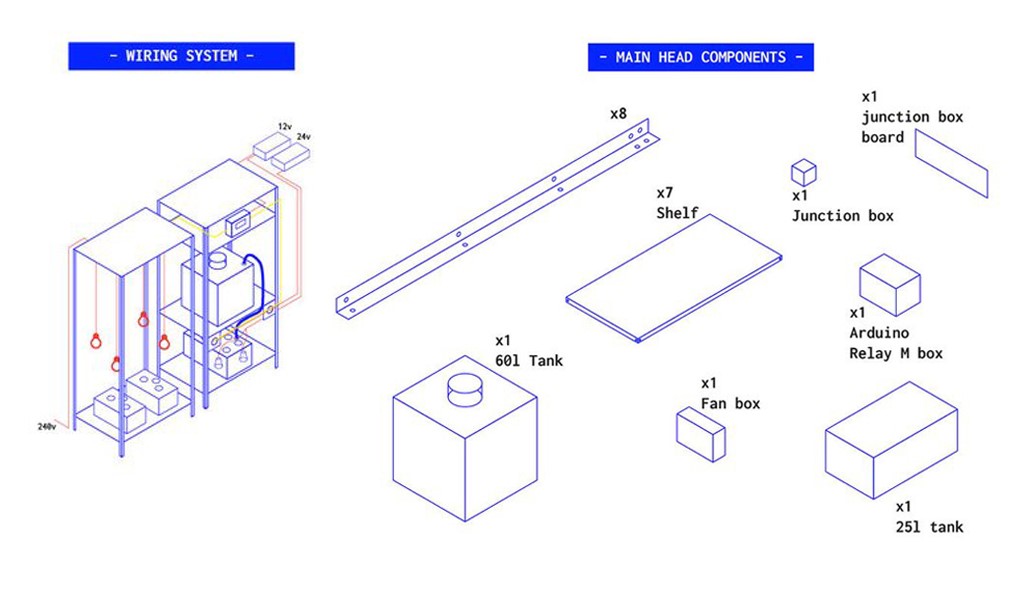
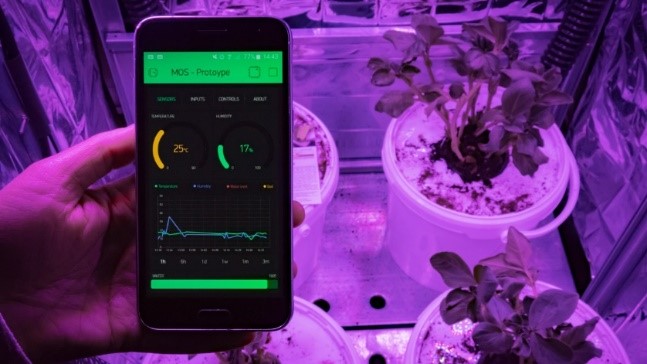
The technologies used in the project are convergent in pooling knowledge (know-how), user behaviour and tools, in this case low-tech and low-cost, to achieve the common goal of adapting to change and recovering from shocks. In the project, the community of inhabitants combines elementary and low-cost technologies, such as scrap electronic components or old Ikea shelving, to produce food survival systems such as hunting spears and innovative hydroponic growing devices with home-scale application. The project shows a smart environment, a system of integrated technologies (apps and PC) collects data, controls and monitors indoor temperature and humidity conditions, thus managing the home-growing activities on which the users’ food self-sufficiency is based.
UNIVERSITÀ DEGLI STUDI DI NAPOLI
Federica Dell'acqua, Sara Verde, Marina Rigillo